Certificate paper is a speciality paper for documents that must stay legible, durable and forgery-proof for decades, such as certificates, diplomas and official records. It is considerably more tear-, moisture- and ageing-resistant than ordinary paper and prints reliably. On request, it can be fitted with security features.
That sets it apart from ordinary paper, which yellows, weakens and suffers under moisture within a few years. Wherever a document has official or archival standing, the material decides whether the document lasts for decades. This article explains what defines certificate paper, how it actually resists time, where it proves itself, and how to choose the right grade.
The terms are used largely interchangeably. Both describe a high-grade, document-proof paper for records with official standing.
"Certificate paper" tends to emphasise certificates, examination records and attestations; "document paper" the wider category of official records. In practice both meet the same requirement profile: the paper must be durable, dimensionally stable, forgery-proof and reliable to print.
The decisive property is document permanence, the fitness of a document to remain valid and legible over a very long time. It is the sum of several material characteristics, each answering a different way that ordinary paper fails.
Ordinary paper is held together by bonds between its cellulose fibres, hydrogen bonds and van der Waals forces. Because those bonds are weak, it loses strength and warps over time; add UV exposure and it yellows. Blending in synthetic fibres and consolidating them with a special impregnation replaces that weak point with a stable, load-bearing structure, so the content stays legible, dimensionally true and tamper-protected for decades, which is exactly what an archival obligation demands.
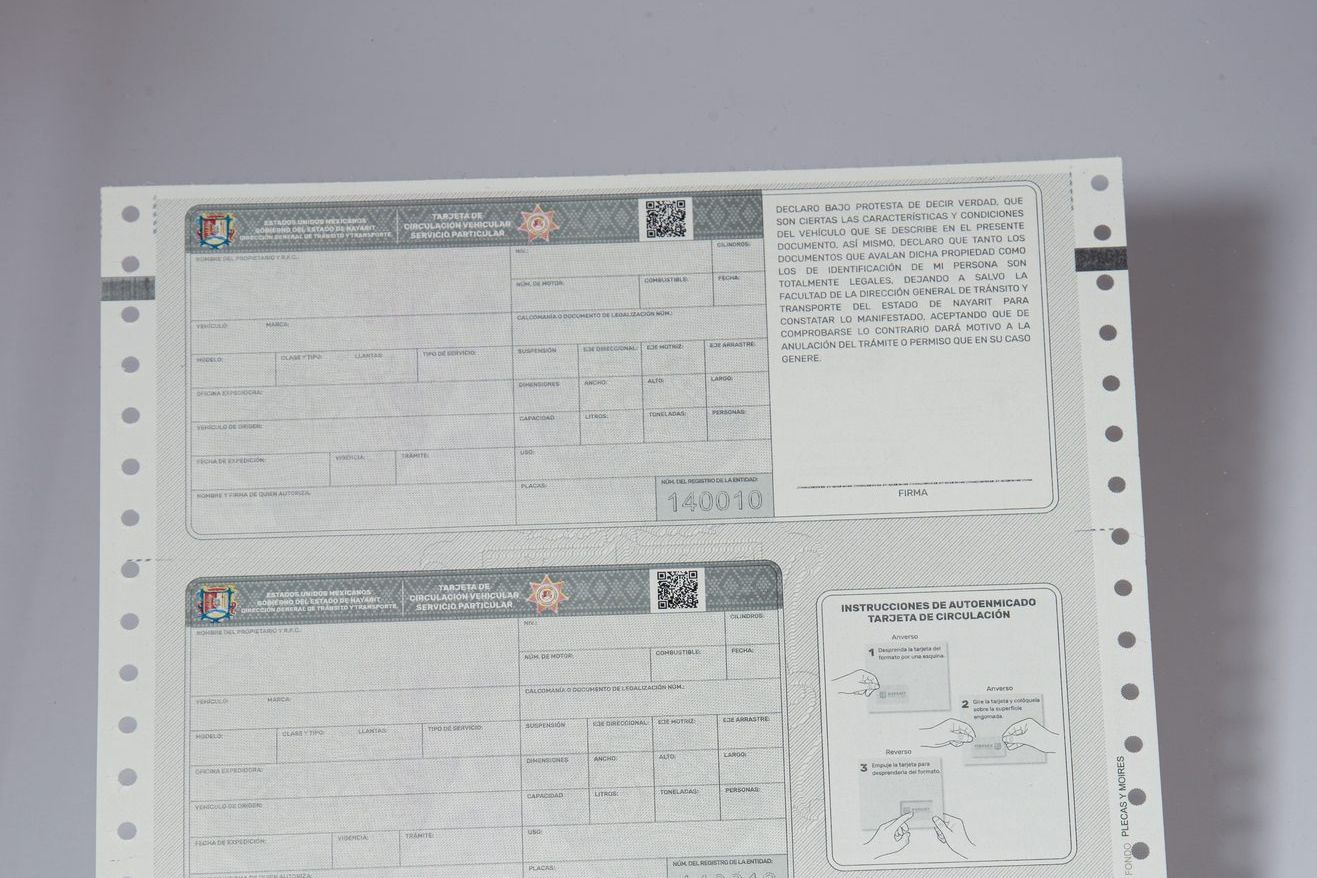
The clearest example of a document built to last is the national vehicle registration document. It lives in a glovebox for the life of a car, is folded and unfolded countless times, and has to resist both wear and forgery, all while carrying integrated security features.
"Documents are mainly made from neobond®, with a higher content of synthetic fibre and synthetic binders. The classic is the vehicle registration document. In many countries neobond® is used with security fibres and watermarks." Jochen Schanzenbächer, Head of Product Development at Lahnpaper
What that example shows is how much rides on the base material. The colour, watermark and security fibres change from country to country, but the substrate underneath, chosen to survive years of folding and handling without failing, stays the same. Get the material right and everything printed on top of it lasts as long as it needs to.
Certificate paper is used wherever a document has to last. Typical fields include:
For documents with particular forgery-protection demands, security paper is the natural extension, for example for vehicle documents or personal identity documents.
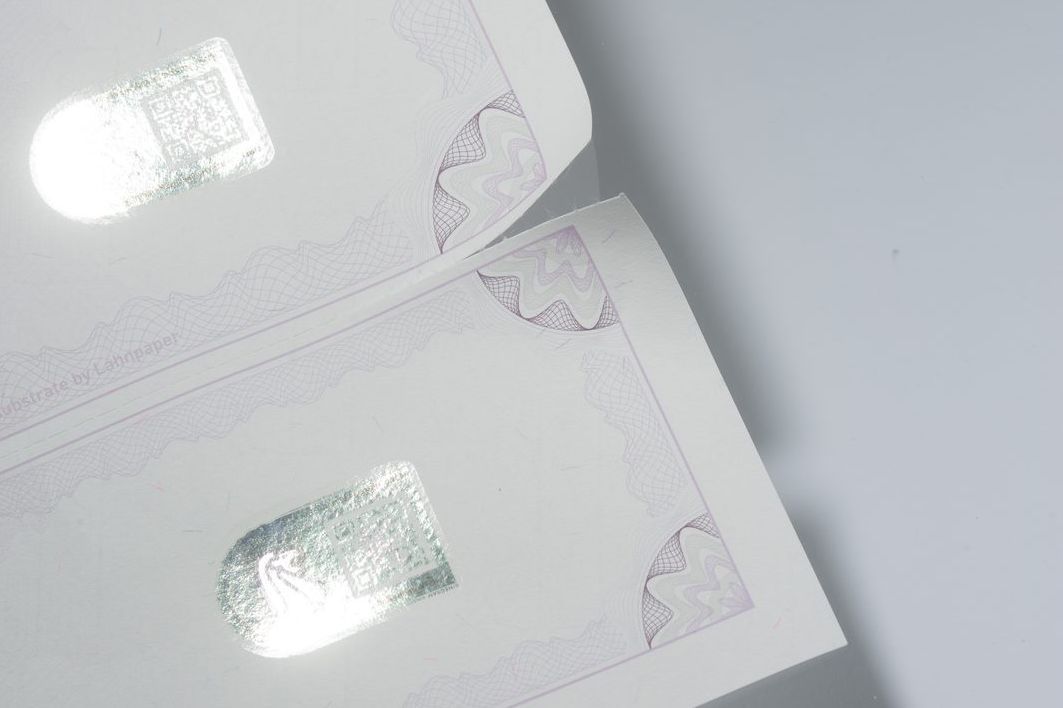
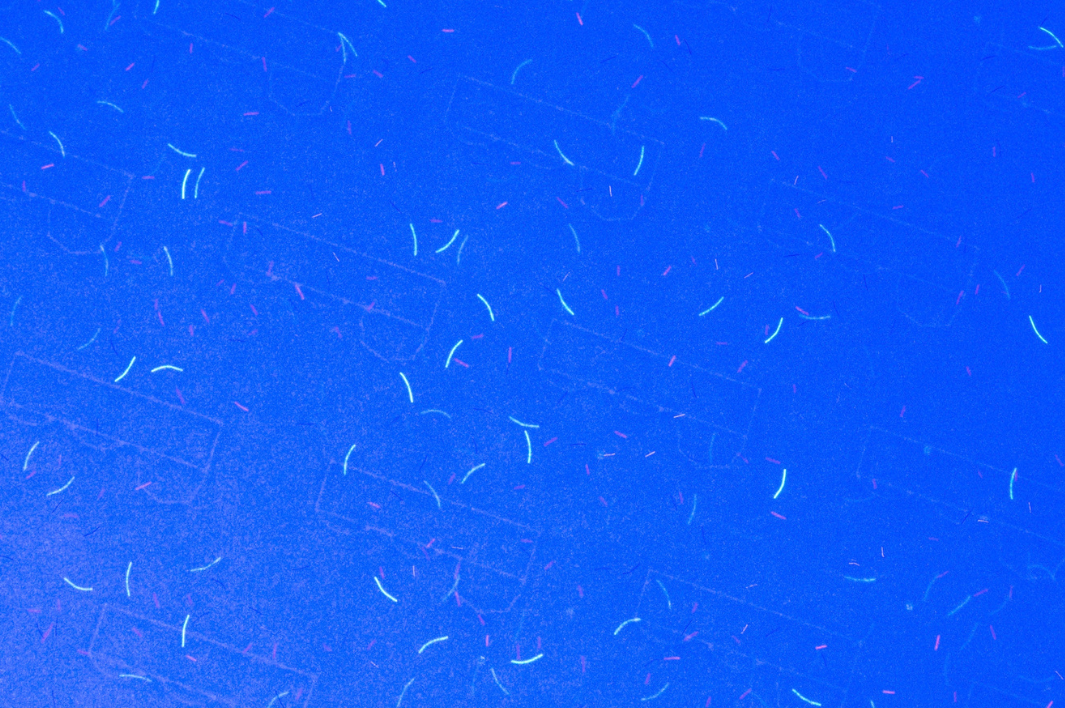
Where authenticity is critical, certificate paper can be fitted with integrated security features. These include watermarks, visible and invisible fibres (UV-fluorescent), and reagent dyes that react to tampering. Many are invisible to the naked eye and reveal themselves only under UV light or with technical devices, which allows a reliable authenticity check without special training.
Converting adds to that: neobond® security substrates can be perforated and die-cut, and readily given the additional protection of seals.
Viele dieser Merkmale sind mit bloßem Auge nicht erkennbar und werden erst unter UV-Licht oder mit technischen Geräten sichtbar. Das erlaubt eine zuverlässige Echtheitsprüfung, ohne besondere Schulung.
Dazu kommt die Weiterverarbeitung: neobond®-Sicherheitssubstrate lassen sich perforieren und stanzen und problemlos zusätzlich mit Siegeln schützen.
Before deciding, three questions help:
The safest route is a test in your own process: request samples and check material, print and finishing against your application before you commit.
For certificate and document paper, Lahnpaper offers two proven substrates.
neobond® is a durable synthetic-fibre substrate made from a blend of selected cellulose and synthetic fibres, consolidated with a special impregnation. It is tear- and fold-resistant, ageing- and temperature-resistant, and can carry security features on request, which makes it a fit for long-life certificates and documents. See the neobond® product page.
pretex® is an impregnated speciality paper with high ageing and moisture resistance that prints excellently, coated or uncoated. See the pretex® product page. Both are available FSC®-certified on request.
Whether certificate, diploma or official attestation, certificate paper pays off wherever a document has to stay legible, durable and forgery-proof for decades. The best grade depends on the required longevity, the security features and the print process.
We are happy to advise you and send samples to test. Request a sample pack and find the right certificate paper for your project.
What is the difference between certificate paper and document paper? The terms are used largely interchangeably. Both describe a document-proof, durable paper for records with official standing, from certificates and diplomas to attestations.
How long does certificate paper last? High-grade certificate paper is tested, depending on grade, to ISO 9706 and/or DIN 6738, and stays stable and legible for decades.
Can certificate paper carry security features? Yes. Watermarks, visible and invisible fibres (UV-fluorescent) and reagent dyes can be integrated on request to increase forgery protection.
Can certificate paper be printed normally? Yes. It is designed for common processes such as offset and digital printing. A short pre-test of the chosen grade is advisable for the specific process.
HEADQUARTERS
Lahnpaper GmbH
Auf Brühl 15-27
56112 Lahnstein
Germany
Phone: +49 2621 177-0
info@lahnpaper.de
POSTAL ADDRESS
P.O. Box 2178
56108 Lahnstein
Germany
GOODS RECEPTION & LOADING TIMES
Mon to Fri from 7am to 2pm