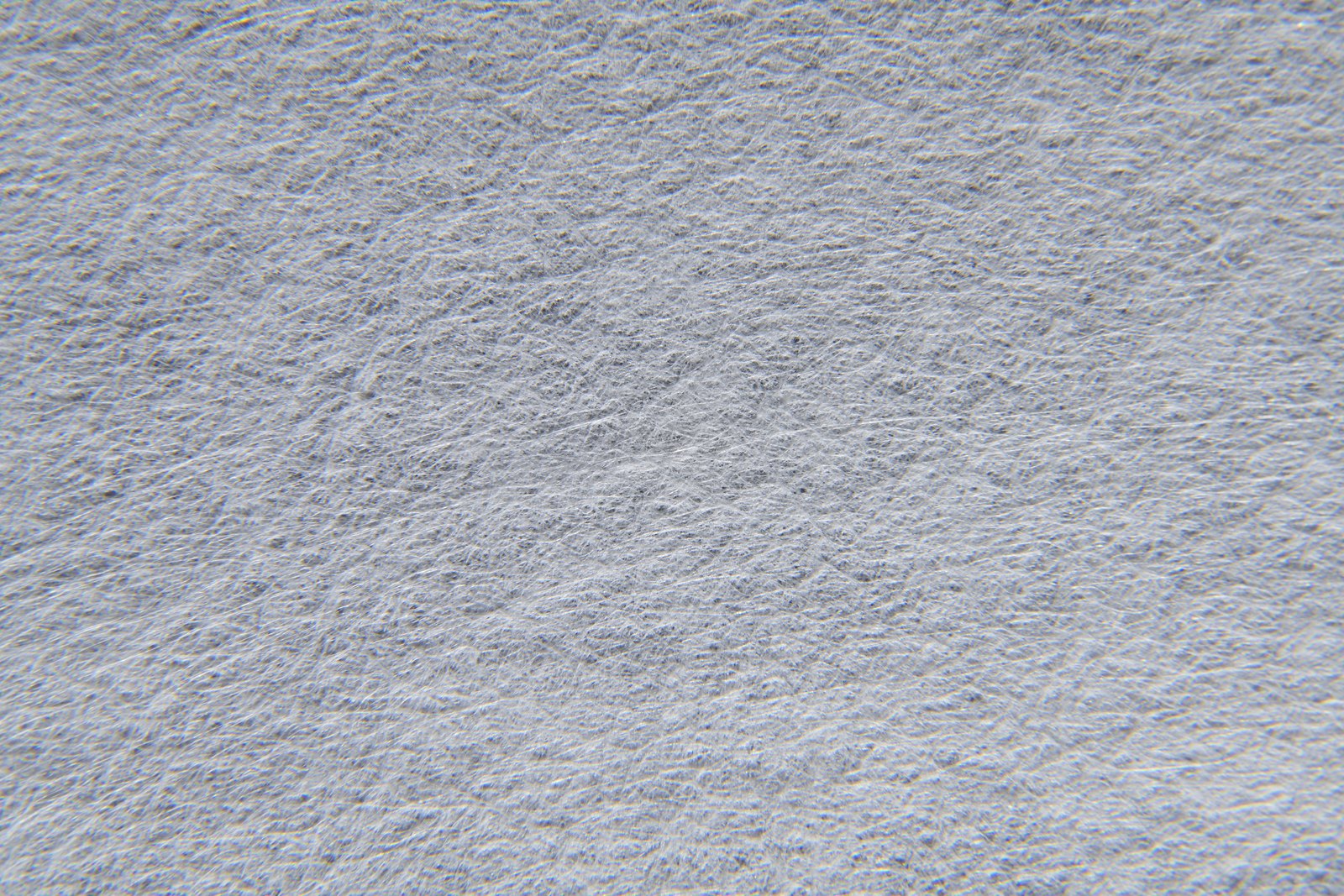
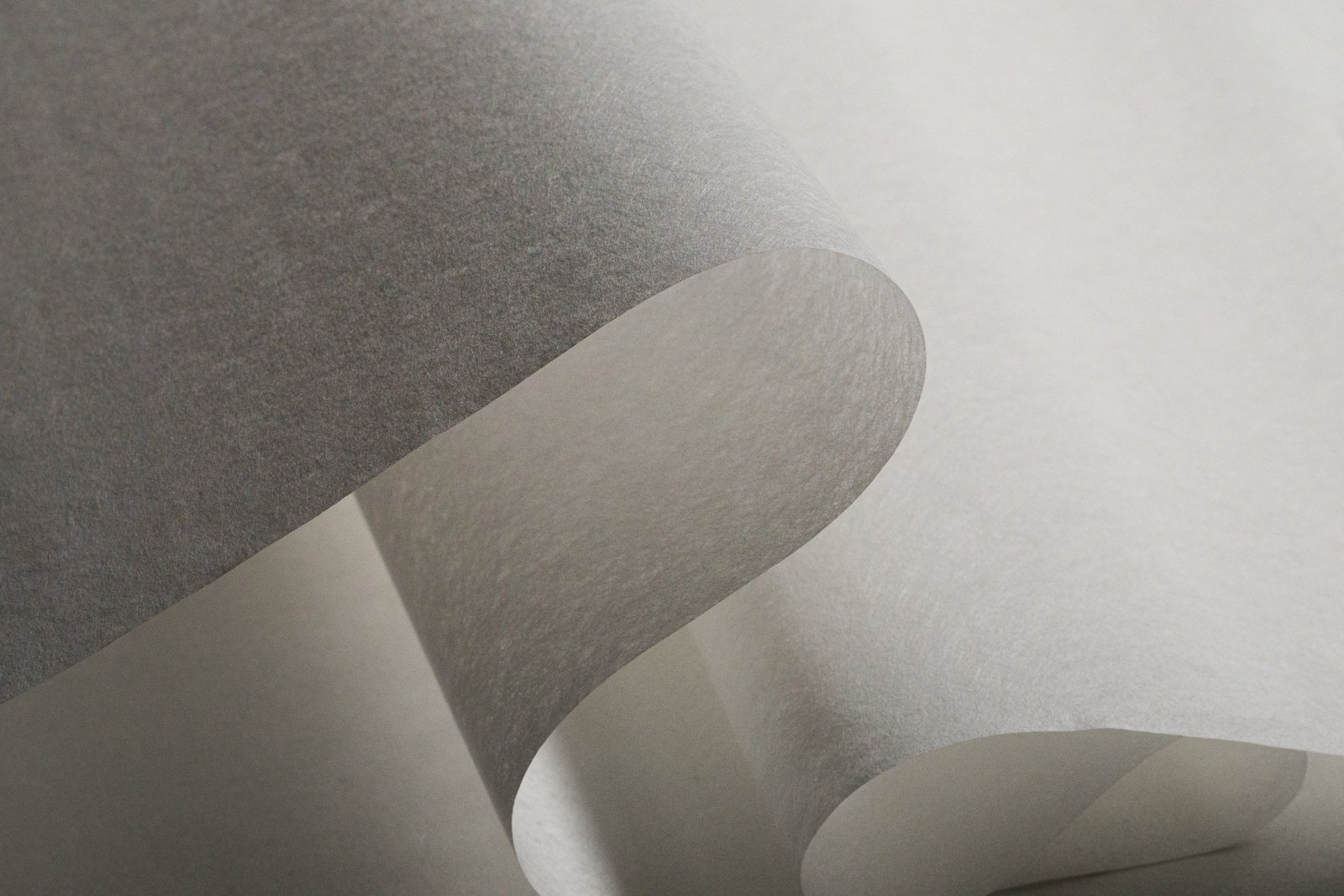
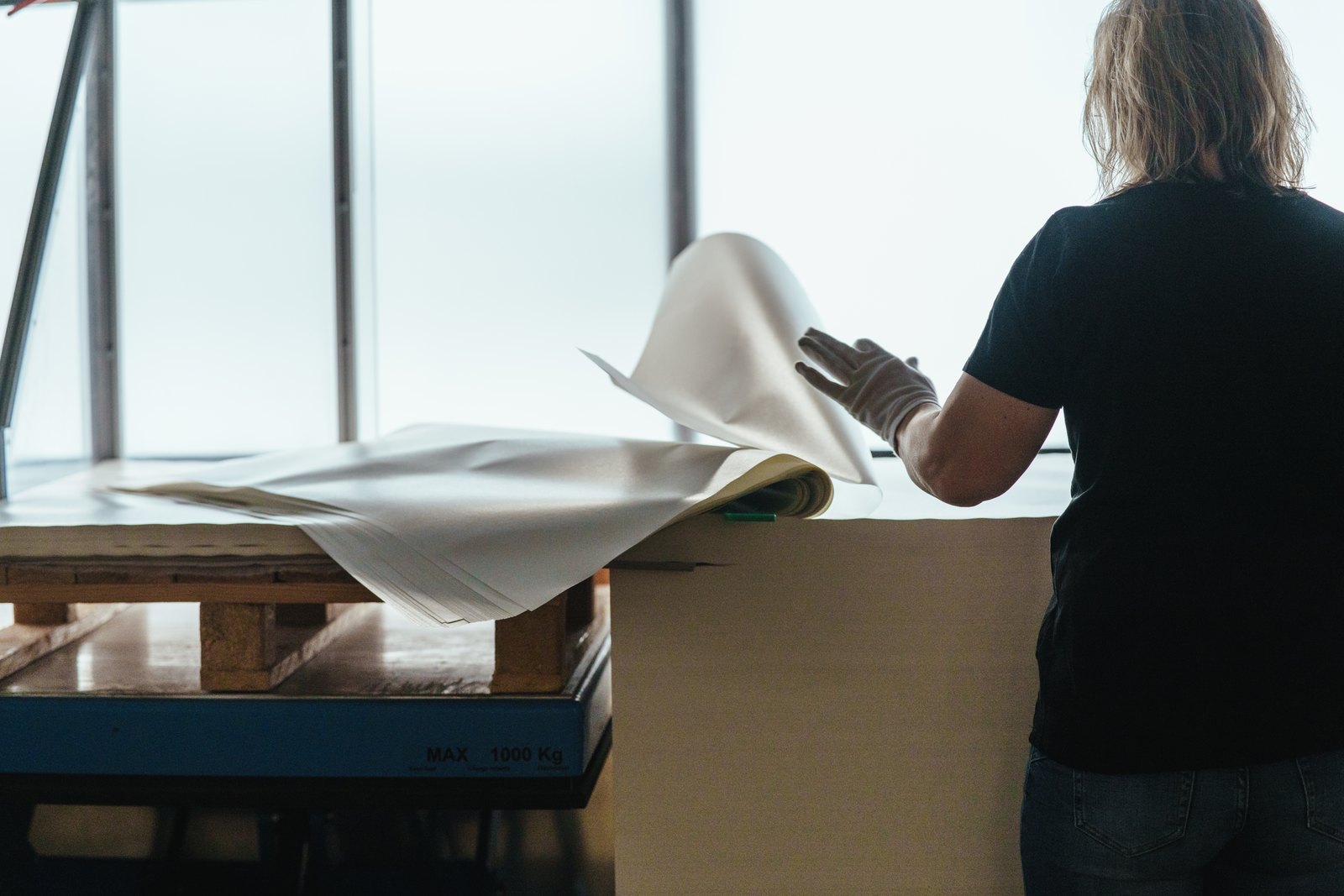
All three are alternatives to conventional paper where it has to be tear- and waterproof, but they are made from entirely different raw materials. Synthetic paper combines cellulose with synthetic fibres, stone paper is based on limestone powder and plastic, and Tyvek is a pure plastic non-woven. That explains their differences in feel, printability and recycling.
Which material is the right one depends on the application, not on the name. In this article we look at the three materials: what they are made of, what they can do, where their limits lie, and which material suits which use.
Synthetic paper is an umbrella term for paper-like materials made wholly or partly from synthetic fibres. At Lahnpaper that includes a synthetic-fibre substrate: a blend of selected cellulose and synthetic fibres, consolidated with a special impregnation.
That combination gives the material the character of paper. It feels and converts like paper, at considerably higher robustness. It is tear- and fold-resistant, water- and chemical-resistant, dimensionally stable and ageing-resistant.
What decides this is how much synthetic fibre can be introduced evenly into the sheet. Lahnpaper produces on an inclined-wire paper machine and so achieves fibre blends of up to 70 per cent synthetic fibre, with a distribution that keeps the sheet homogeneous and stable. The higher the synthetic-fibre content, the higher the mechanical stability, porosity and dimensional stability.
This is precisely where the difference to the other two materials lies: they achieve their robustness through a high plastic content. Lahnpaper's synthetic-fibre substrates achieve it through a fibre recipe, and keep the character of paper.
"Stone paper and Tyvek have nothing to do with paper: there is neither cellulose nor wood fibre in them. Our advantage lies in printability and in heat resistance. A polymer, whether Tyvek or stone paper, melts at higher temperatures and loses its structure. Our material stays stable against temperature and heat." Jochen Schanzenbächer, Head of Product Development at Lahnpaper
Stone paper, also sold as mineral paper or rock paper, consists of calcium carbonate bound with a plastic resin, usually high-density polyethylene (HDPE). Depending on the grade, the ratio is around 60 to 80 per cent calcium carbonate to 20 to 40 per cent resin. No cellulose is used, neither trees nor any appreciable amount of water is required for production, and no bleaching agents or acids are involved. Energy demand is also lower than that of conventional wood-pulp paper, which is why stone paper is often marketed as an ecological alternative. Strictly speaking it is not paper, but a paper-like material.
The material is waterproof, tear-resistant even at low grammages, and has a smooth, slightly velvety surface. It suits offset, UV and digital printing well; laser printing much less so, because the heat of the fuser unit deforms the plastic content. In recycling, stone paper takes a route of its own: it is not biodegradable, breaks down slowly into microplastic under UV light, and fits neither the waste-paper nor the plastics stream.
Tyvek is a product brand, as are pretex® and neobond®. It is a non-woven of flash-spun high-density polyethylene filaments, bonded without a binder by heat and pressure. So it is not paper in the true sense, but a plastic material that appears paper-like.
Tyvek is very light, extremely tear-resistant and waterproof, and is often used for envelopes, protective clothing, wristbands or building protection. Because it consists entirely of plastic it is very robust, but in feel and printability it is a long way from real paper, and in recycling it is classified as a plastic.
| Property | Lahnpaper's synthetic-fibre substrate | Stone paper | Tyvek |
|---|---|---|---|
| Structure | Cellulose + synthetic fibres (polyamide, polyester and viscose), impregnation | approx. 80% limestone powder + 20% plastic (HDPE) | Polyethylene non-woven (plastic) |
| Water resistance | High | High | High |
| Tear resistance | High | Medium to high | Very high |
| Feel | Paper-like | Smooth, velvety, mineral | Plastic-like |
| Printability | Good, common print processes | Offset, UV and digital good; laser barely | Limited, special processes |
| UV / temperature | Ageing- and temperature-resistant | More sensitive to UV and heat | Limited heat resistance |
| Security features | Security features embedded in the fibre matrix: watermarks, UV fibres, planchettes | None | None |
The table shows there is no "best" material, only the best-suited one. Lahnpaper's synthetic-fibre substrate scores where paper character, printability and optional security features are wanted. Stone paper plays to its raw-material base, Tyvek to its extreme lightness and strength.
A few simple guiding questions help with the choice:
Where paper character, longevity, robustness and printability have to come together, neobond® is the fitting solution. The synthetic-fibre substrate is made from a blend of selected cellulose and synthetic fibres, consolidated with a special impregnation, and is coated on both sides for good printability.
neobond® has been used for decades for long-life security documents, from vehicle papers through ID cards to certificates, and can be fitted with security features on request. It is available FSC®-certified on request. See the neobond® product page. For applications with lower demands on robustness, pretex® is the complementary option.
Synthetic paper, stone paper and Tyvek each solve different problems. If you are looking for a material that converts like paper, is durable and robust, and can carry security features where needed, the route leads to neobond®.
We are happy to advise you and send samples to test. Request a sample pack and find the right waterproof paper for your project.
Is synthetic paper the same as plastic? No. Synthetic paper at Lahnpaper combines cellulose with synthetic fibres and keeps the character of paper. Tyvek, by contrast, consists entirely of plastic, and stone paper predominantly of limestone with a plastic content.
Which material is the most printable? The synthetic-fibre papers pretex® and neobond® are designed for common print processes and behave largely like conventional paper. Tyvek often requires special processes, and stone paper in part adapted inks.
Can synthetic paper carry security features? Yes. Watermarks, visible and invisible fibres (UV-fluorescent) and reagent dyes can be integrated on request, ideal for ID cards and security documents.
Is the synthetic-fibre substrate recyclable? No synthetic-fibre paper can be recycled through the normal waste-paper stream. The specific material structure decides the correct disposal route, and we are happy to advise on that.
HEADQUARTERS
Lahnpaper GmbH
Auf Brühl 15-27
56112 Lahnstein
Germany
Phone: +49 2621 177-0
info@lahnpaper.de
POSTAL ADDRESS
P.O. Box 2178
56108 Lahnstein
Germany
GOODS RECEPTION & LOADING TIMES
Mon to Fri from 7am to 2pm