Waterproof paper is a speciality paper that can meet water without swelling, tearing, disintegrating or becoming illegible. The choice of fibres and a special impregnation give it the strength to stay dimensionally stable and colour-fast under moisture and wet, temperature change and heavy use, with no need for additional lamination.
This is where the real difference from ordinary paper shows. Conventional paper loses its structure when wet; waterproof paper keeps its strength and its function. For anything that has to hold up outdoors without protection, or under load, that is the decisive difference. This article explains how waterproof paper actually works, where it earns its place, and how to choose the right grade.
These three terms are often used interchangeably, but they describe different things, and the distinction matters when you specify a material.
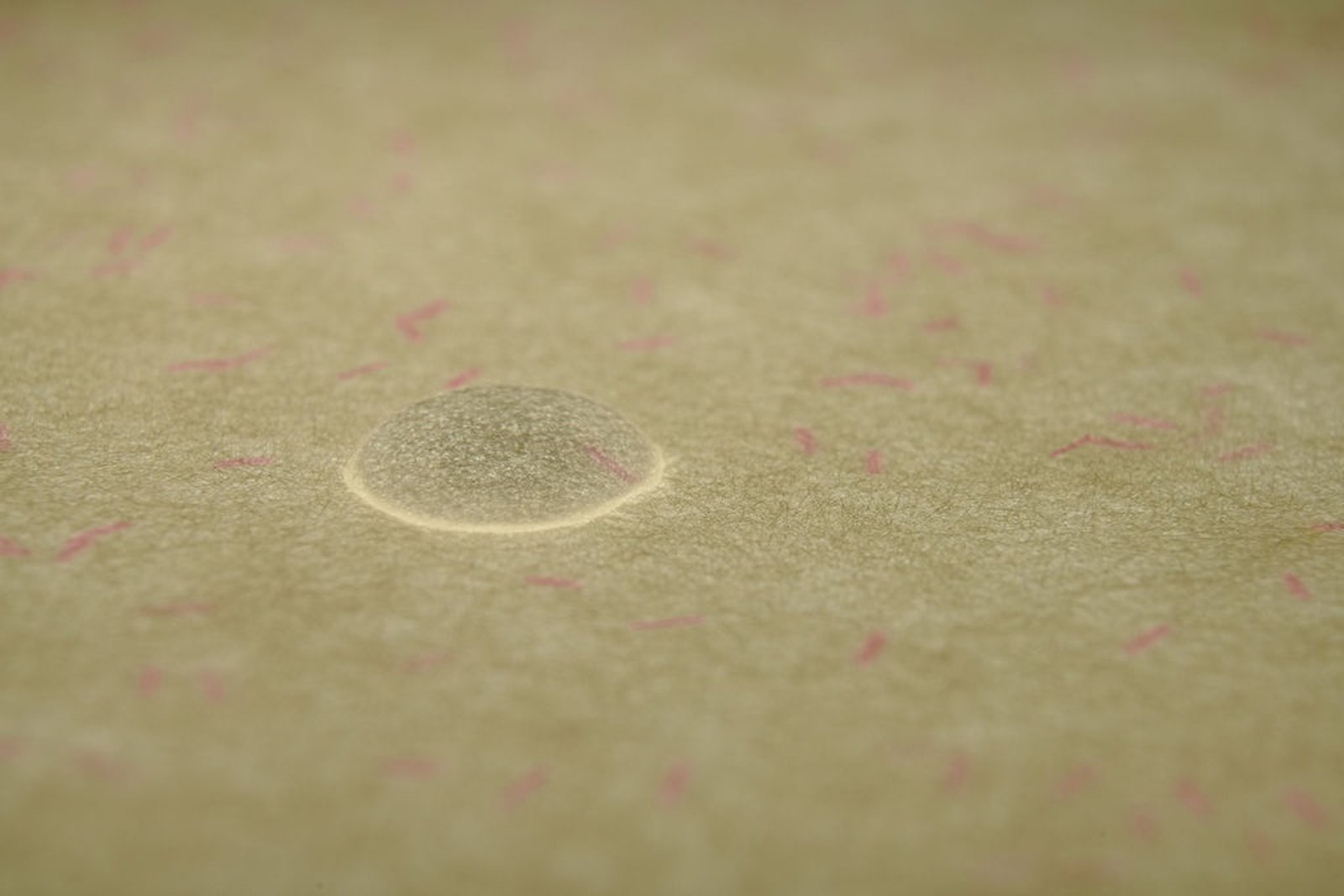
Water-repellent means the surface does not absorb water. Place a drop on it and the drop simply beads. Waterproof does not necessarily mean repellent: the substrate may take up some water, but its physical strength holds, so it does not fall apart when wet or torn. Water-resistant sits in between, a middle position where the material stands up to water without necessarily repelling it.
The rule of thumb: the wetter and more prolonged the exposure, the more you need waterproof or water-resistant performance rather than a purely repellent surface.
The strength of waterproof paper is designed in, not left to chance. It is set in the recipe, and above all in the choice of binders for the impregnation.
Ordinary paper loses its strength when wet because its cellulose fibres are held together mainly by hydrogen bonds. Add water and those bonds release, so the sheet softens and disintegrates. Waterproof paper is built to defeat exactly that mechanism. At Lahnpaper, synthetic fibres are blended into the pulp, then the fibres are cross-linked with one another by a binder. That cross-linking is the point at which paper becomes a durable, robust and waterproof material. The impregnation closes the structure against moisture on top of that.
"For waterproof and water-resistant products, it is wet-strength additives that reinforce the base paper, together with synthetic binders that we cross-link in our process. So when you rewet the substrate, they do not dilute again: they keep the physical properties of the paper as they were." Jochen Schanzenbächer, Head of Product Development at Lahnpaper
The proportion of synthetic fibre shapes what the product can do. Lahnpaper achieves fibre blends of up to 70% synthetic content. The higher that proportion, the higher the mechanical stability, porosity and dimensional stability.
A proportion that high is only possible because of the inclined-wire paper machine. It works with a more dilute furnish and so distributes the fibres especially evenly, even when a great deal of synthetic fibre is involved. On a conventional Fourdrinier machine synthetic fibres distribute less evenly and the achievable proportion is limited. The result of inclined-wire production is a homogeneous, stable sheet. The finishing that follows makes the paper waterproof, tear- and fold-resistant, ageing- and temperature-resistant, and resistant to many chemicals.
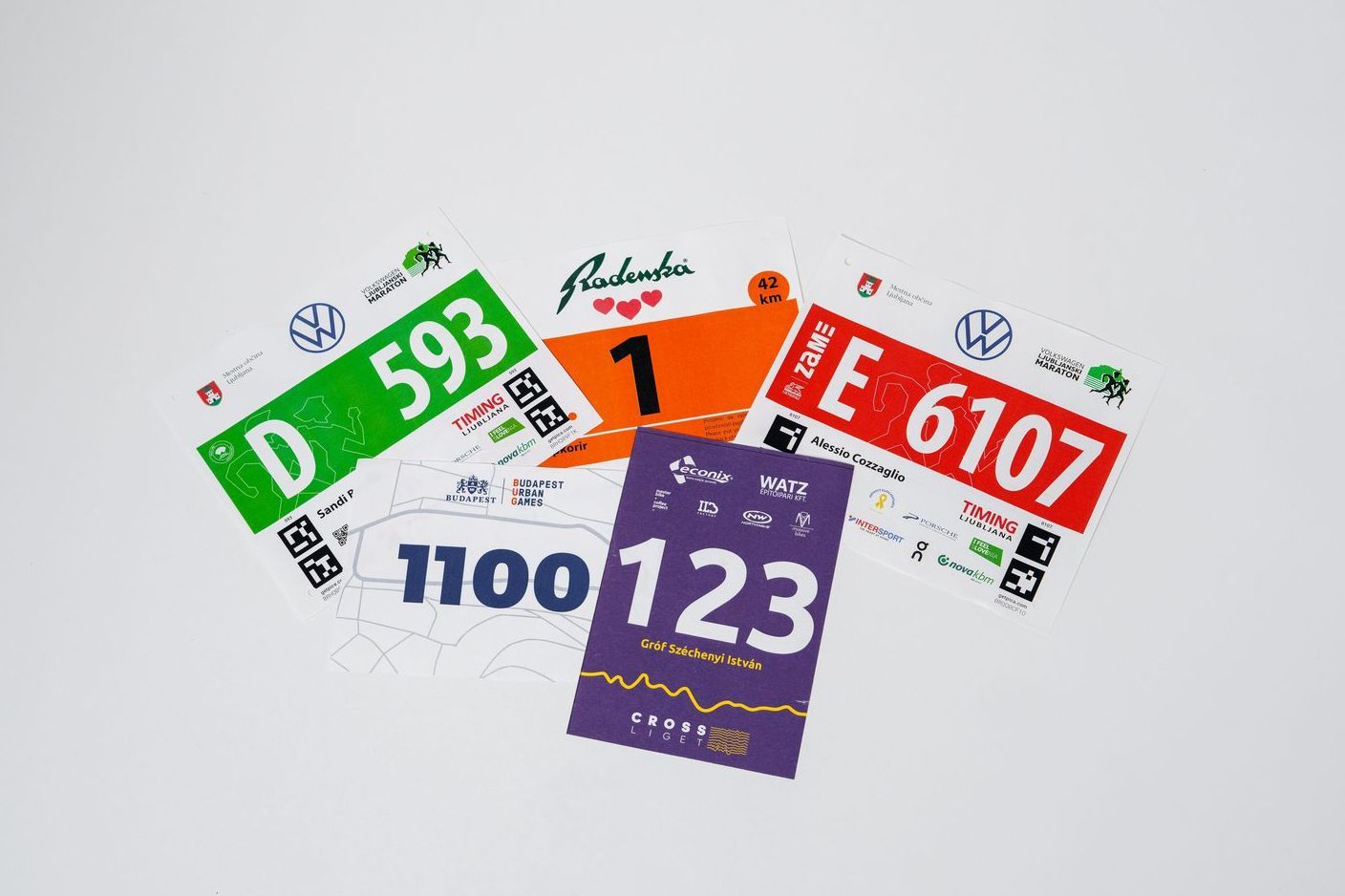
There is a further challenge in printing waterproof materials. A surface that is fully water-repellent will not accept ink, so a printable waterproof paper is deliberately water-resistant rather than repellent. Getting both at once, easy to print yet stable when wet, is precisely what a map, an outdoor label or a race number needs.
Technical datasheets carry two figures. Dry strength describes how much tensile force the paper withstands when dry. Wet strength describes the same thing in the wet state, and it is the genuinely demanding one.
In ordinary paper, wet strength all but collapses. In Lahnpaper's speciality papers it is retained: the materials withstand heavy mechanical load when dry and, just as importantly, when wet. If you are choosing a paper for a damp environment, wet strength is therefore the figure that counts.
Waterproof paper earns its place wherever ordinary paper reaches its limits. Typical fields include:
The common thread is simple: the printed product has to work as reliably in the wet as it does on the desk.
Before deciding on a grade, three questions do most of the work:
The surest route is a test in your own process: request samples and check material, surface and printability directly against your application before the run starts.
For waterproof applications, Lahnpaper offers three proven materials with different strengths.
neobond® is a durable synthetic-fibre substrate for products that must last and take heavy use. It is tear- and fold-resistant, water- and chemical-resistant, and can be fitted with security features on request, which makes it a fit for ID documents, certificates and long-life records. See the neobond® product page.
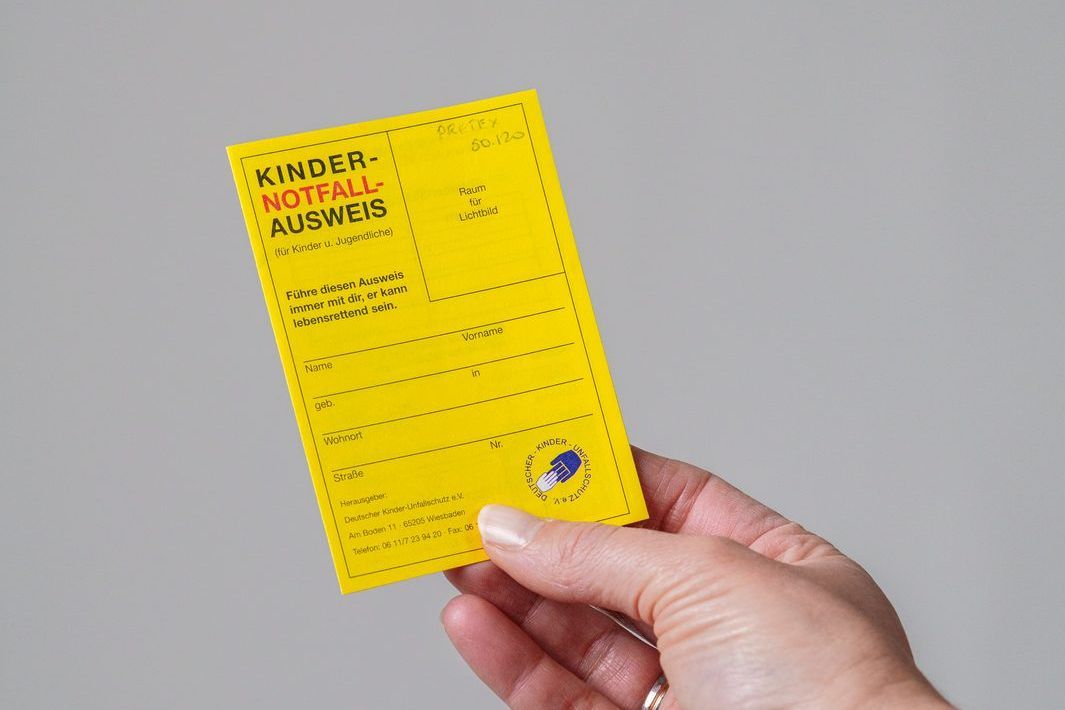
pretex® is an impregnated speciality paper for applications where ordinary paper is not robust enough: waterproof, tear-resistant, with high ageing and temperature resistance, coated or uncoated. See the pretex® product page.
cuturon® is a non-woven made from selected cellulose and synthetic fibres, produced by the wet-laid process, impregnated and purposefully finished. Its fine-fibre structure, porosity and absorbency suit applications where air permeability and a distinctive look and feel are what matter.
All three print and finish reliably and are available FSC®-certified on request.
Whether map, label, ID card or outdoor advertising, waterproof paper pays off wherever moisture, load and longevity meet. The best grade depends on your specific application, the print process and the intended finishing.
We are happy to advise you and send samples to test. Request a sample pack and find the right waterproof paper for your project.
Is waterproof paper also tear-resistant? Yes. The high synthetic-fibre content means materials such as neobond®, cuturon® and pretex® keep their strength even when wet, particularly their tear-continuation resistance and fold endurance.
Can waterproof paper be printed normally? Yes. These papers are designed for common processes such as offset, digital and screen printing. A short pre-test of the chosen grade is advisable for the specific process.
Does waterproof paper need laminating? No. The material is itself tear- and waterproof, so no additional plastic layer is required and the products are ready to use.
Is waterproof paper sustainable? Selected Lahnpaper grades are available FSC®-certified on request. The material is durable and can therefore stay in use over a long period without losing function. Because no lamination is needed, an additional plastic layer is also avoided.
HEADQUARTERS
Lahnpaper GmbH
Auf Brühl 15-27
56112 Lahnstein
Germany
Phone: +49 2621 177-0
info@lahnpaper.de
POSTAL ADDRESS
P.O. Box 2178
56108 Lahnstein
Germany
GOODS RECEPTION & LOADING TIMES
Mon to Fri from 7am to 2pm