Weatherproof paper is a speciality paper that can survive outdoors for the long term. It withstands rain and moisture, UV light, temperature change and abrasion without swelling, fading or tearing. Because the material is itself durable, it needs no additional lamination and is ready to use immediately.
That sets it apart from ordinary paper, which quickly softens, yellows or disintegrates outdoors. Wherever a printed product is exposed to wind and weather, the material decides whether it lasts weeks or years. This article explains what "weatherproof" really means, how it works, where it proves itself, and how to choose the right material.
Weatherproofing is more than water resistance. A material that has to survive outdoors must withstand several influences at once:
Only when a paper meets all of these is it truly weatherproof. Water resistance alone is not enough for outdoor use, which is the single most common misjudgement in specifying an outdoor material.
The usual way to make paper survive outdoors is to laminate it with a plastic film. It works, but it brings drawbacks: added cost, an extra process step, and a material mix that is hard to separate and dispose of. The film can also lift or cloud over time, and once it does, the paper beneath is unprotected.
Weatherproof speciality papers take a different route: the resistance is built into the sheet rather than added on top. The combination of cellulose, synthetic fibres and an impregnation makes the material itself tear- and waterproof, light- and temperature-resistant, so it holds up as a single, homogeneous material with no layer to fail. No lamination is required, which means the product is ready to use and simpler to handle.
"Our products are still paper-based, but with functionality far beyond standard offset paper. I would say Lahnpaper starts where paper ends." Jochen Schanzenbächer, Head of Product Development at Lahnpaper
Few outdoor environments are harsher on a printed product than an underground railway: constant humidity, temperature swings, dust, and the mechanical stress of frequent changeovers. For advertising campaigns in the London Underground, Lahnpaper developed a bespoke material matched precisely to those conditions: tough enough to stay presentable in the tunnels, yet designed to be removed cleanly when the campaign changes.
The example shows weatherproofing as a system rather than a single property. The material has to resist moisture and wear over a full campaign, print to advertising quality, and still behave well in handling. That combination, endurance plus printability plus practicality, is what separates a genuinely weatherproof paper from one that merely keeps out water.
Weatherproof paper is used wherever a printed product has to defy the weather. Typical fields include:
The common thread: the product has to work as reliably outdoors as it does indoors.
Three questions help before you settle on a material:
The safest route is a test in your own process: request samples and check the material against your application before the run starts.
Whether a printed product survives outdoors is usually decided at the material stage. Four mistakes come up especially often:
The surest way past these is an early sample test: check the material under real conditions before the run starts.
For outdoor use, Lahnpaper offers two proven substrates.
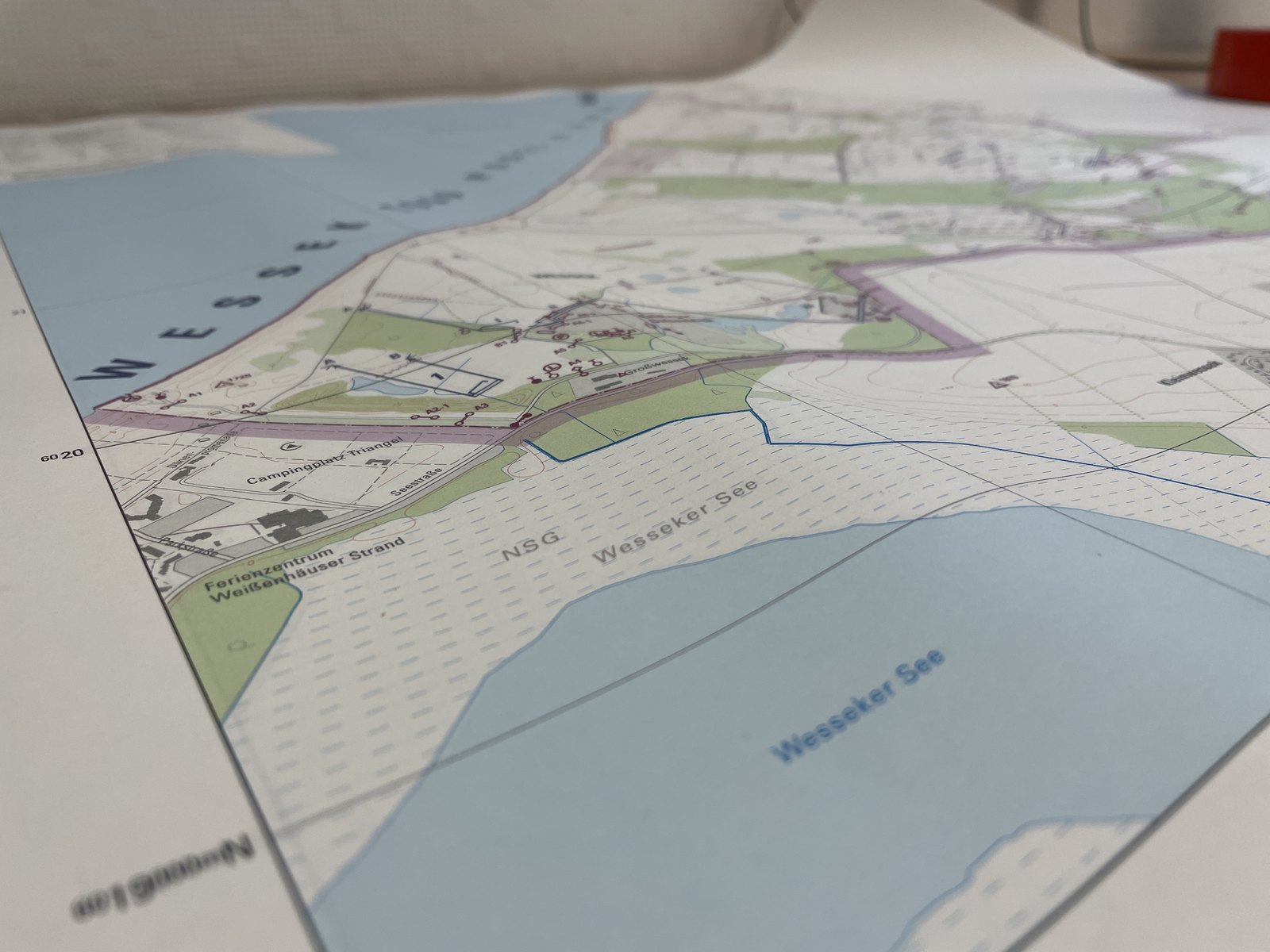
pretex® is an impregnated speciality paper that is weatherproof, tear-resistant and durable, with high ageing and temperature resistance. Ideal for maps, race numbers and outdoor advertising. See the pretex® product page.
neobond® is a durable synthetic-fibre substrate that is water- and chemical-resistant, dimensionally stable and light-fast, ideal for long-life documents and applications in the public realm. See the neobond® product page. Both are available FSC®-certified on request.
Whether map, race number, label or outdoor advertising, weatherproof paper pays off wherever a printed product has to withstand wind and weather. The best grade depends on the environmental influences the application meets, the intended lifespan and the print process.
We are happy to advise you and send samples to test. Request a sample pack and find the right weatherproof paper for your project.
What is the difference between waterproof and weatherproof? Waterproof refers only to protection against moisture. Weatherproof means a material also withstands UV light, temperature change and abrasion, that is, all the influences of outdoor use.
Does weatherproof paper need laminating? No. High-grade weatherproof speciality papers are themselves tear- and waterproof as well as light-resistant. No additional plastic layer is needed, so the product is ready to use.
Does weatherproof paper fade in the sun? Suitable materials offer good light- and colour-fastness and stay colour-stable under UV exposure for a long time. For heavily stressed applications, a pre-test of the chosen grade is advisable.
HEADQUARTERS
Lahnpaper GmbH
Auf Brühl 15-27
56112 Lahnstein
Germany
Phone: +49 2621 177-0
info@lahnpaper.de
POSTAL ADDRESS
P.O. Box 2178
56108 Lahnstein
Germany
GOODS RECEPTION & LOADING TIMES
Mon to Fri from 7am to 2pm