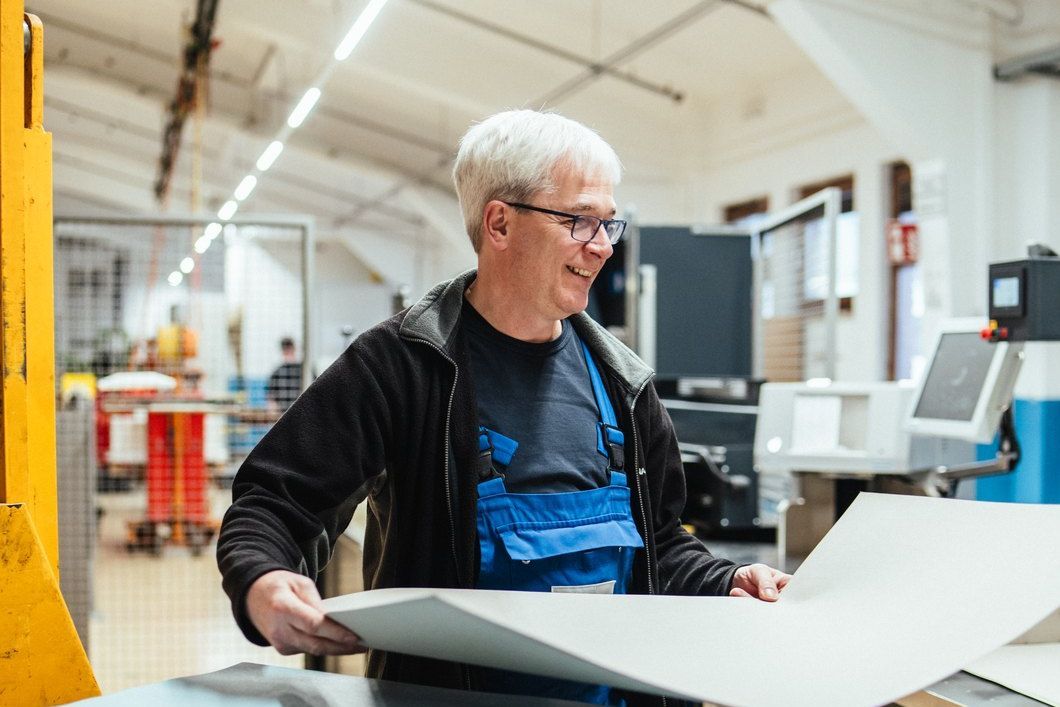
Tear-resistant paper is a speciality paper that withstands far higher tearing forces than ordinary paper, wet as well as dry. Embedded synthetic fibres form a particularly load-bearing network, so the paper stays stable even under heavy mechanical stress, moisture and frequent use.
That makes it at home exactly where ordinary paper reaches its limits: documents that are used a great deal, labels and maps used outdoors, or anywhere a tear would render the product unusable. This article explains how tear-resistant paper actually works, what the key figures mean, where it proves itself, and how to choose the right material.
Ordinary paper is made of cellulose fibres held together mainly by hydrogen bonds. These bonds are adequate when dry, but break easily as soon as moisture or a point load is added. A small nick is enough, and the sheet gives way.
Tear-resistant paper starts precisely here. At Lahnpaper, synthetic fibres are blended into the pulp and cross-linked by a binder. The result is a fibre network that distributes forces across the sheet rather than letting them concentrate and tear away at a single point. The synthetic-fibre content can reach up to 70%: the higher it is, the higher the mechanical stability and strength. These materials are produced on an inclined-wire paper machine, which distributes the fibres especially evenly and so yields a homogeneous, load-bearing sheet.
Technical datasheets carry two figures that describe more precisely what a paper can take, and they do not always move together:
When you choose a paper, it is worth looking at both figures, especially where the material will meet moisture or constant handling. A high dry-tear figure means little if the sheet gives way the moment it gets wet.
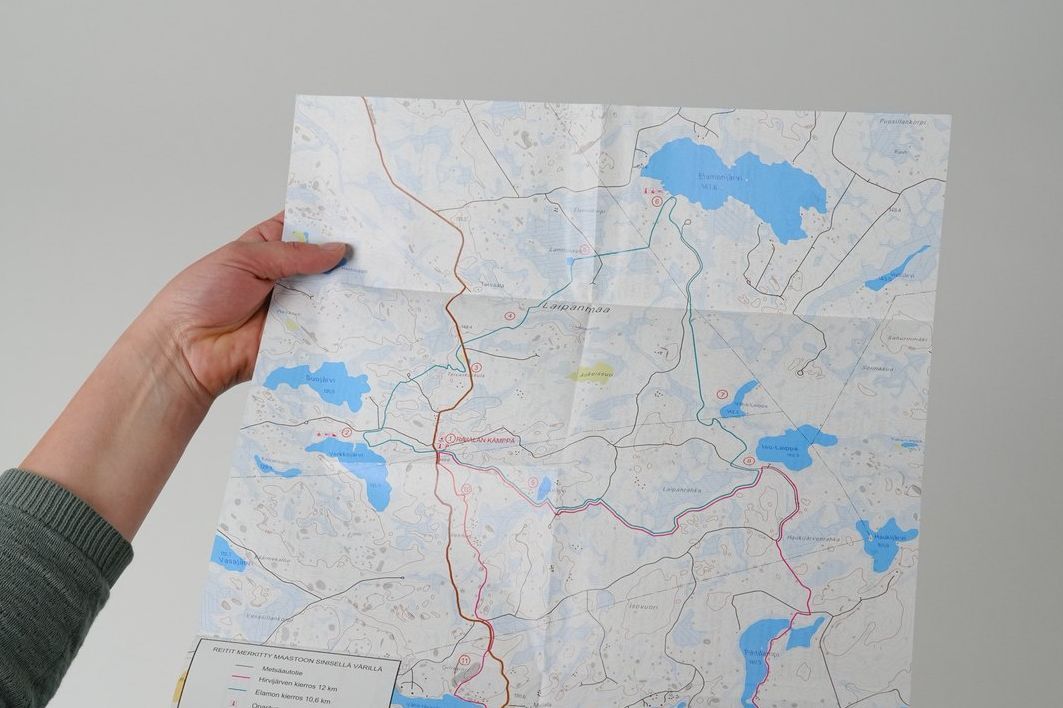
The everyday endurance test for tear-resistant paper is the printed map. It is opened, refolded and stuffed back into a pocket hundreds of times, often outdoors and often damp, and the fold lines are where failure starts. That is precisely where the material has to hold.
"It is not only about being water resistant, but also about being durable. A map can be folded a couple of hundred, a couple of thousand times without breaking. It is that mix of properties that makes a good Lahnpaper product." Jochen Schanzenbächer, Head of Product Development at Lahnpaper
The map makes the point that tear resistance is rarely needed on its own. It shows up alongside wet strength and fold endurance, because the real world applies all three at once. A material that scores well on one figure and poorly on the others fails in exactly the situation it was bought for. The right tear-resistant paper is the one whose properties combine to match the way the product is actually used.
Tear-resistant paper is used wherever a tear would be costly or dangerous. Typical fields include:
The common thread: the material has to hold, even under load.
Before deciding, three questions help:
The safest route is a test in your own process: request samples and check the material directly against your application before you commit to a run.
For tear-resistant applications, Lahnpaper offers three proven substrates.
neobond® is a durable synthetic-fibre substrate made from selected cellulose and synthetic fibres, consolidated with a special impregnation. It is tear- and fold-resistant, water- and chemical-resistant, and can carry security features on request. See the neobond® product page, or the security paper overview.
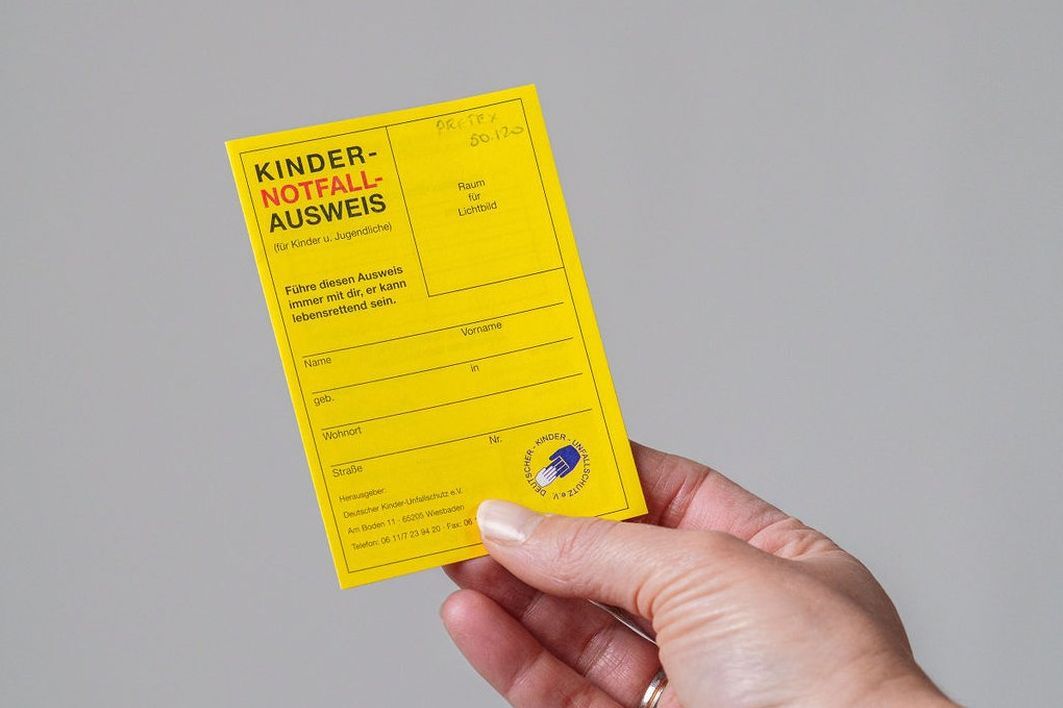
pretex® is an impregnated speciality paper made particularly tear-resistant by embedded synthetic fibres, wet as well as dry. See the pretex® product page.
cuturon® is a non-woven made from selected cellulose and synthetic fibres, produced by the wet-laid process, impregnated and purposefully finished. Its fine-fibre structure, porosity and absorbency suit applications where air permeability and a distinctive look and feel are what matter.
Our products are available FSC®-certified on request.
Whether ID card, map, label or race number, tear-resistant paper pays off wherever mechanical stress and longevity meet. The best grade depends on the type of stress, the moisture involved and the print process.
We are happy to advise you and send samples to test. Request a sample pack and find the right tear-resistant paper for your project.
What makes paper tear-resistant? Tear resistance comes from embedded synthetic fibres that form a load-bearing network and distribute forces. The higher the synthetic-fibre content, the higher the strength.
Is tear-resistant paper also waterproof? Many tear-resistant speciality papers such as neobond®, cuturon® and pretex® are also waterproof and keep their strength when wet.
Can tear-resistant paper be printed normally? Yes. It is designed for common processes such as offset, digital and screen printing. A short pre-test of the chosen grade is advisable for the specific process.
HEADQUARTERS
Lahnpaper GmbH
Auf Brühl 15-27
56112 Lahnstein
Germany
Phone: +49 2621 177-0
info@lahnpaper.de
POSTAL ADDRESS
P.O. Box 2178
56108 Lahnstein
Germany
GOODS RECEPTION & LOADING TIMES
Mon to Fri from 7am to 2pm